Club Rules For 2026
All club members should read their copy of the BMFA handbook paying particular attention to flying safety and model/equipment maintenance. All members must have BMFA insurance through the Stansted Model Flying Club, another club, or by direct membership of the BMFA. The Secretary in the last two cases will require proof of membership of the BMFA.
SITE
Flying times are every day (apart from Tuesday and Thursday) from 10:00 until dusk. Be courteous and polite to other site users (horse riders, cyclists, dog walkers) and do not leave any litter. Guests are by invitation of members only and flying guests should hold current BMFA insurance. Model safety, frequency control, behavior, and explanation of club rules to guests are the responsibility of the member who invited them. Serious incidents occurring at the site must be reported to a committee member as soon as possible. This is essential where injuries are involved
MODELS
All members will be held responsible for the integrity of their own models, another competent flyer before a test flight. Any model deemed to be particularly noisy or unsafe for controlled flight can tee member present at the time. Hopefully, with issues resolved and with help At this current time, all model’s (fixed wing and rotary) powered by a gas turbine the landlord and the suitability of the site for this type of powered model.
FLYING
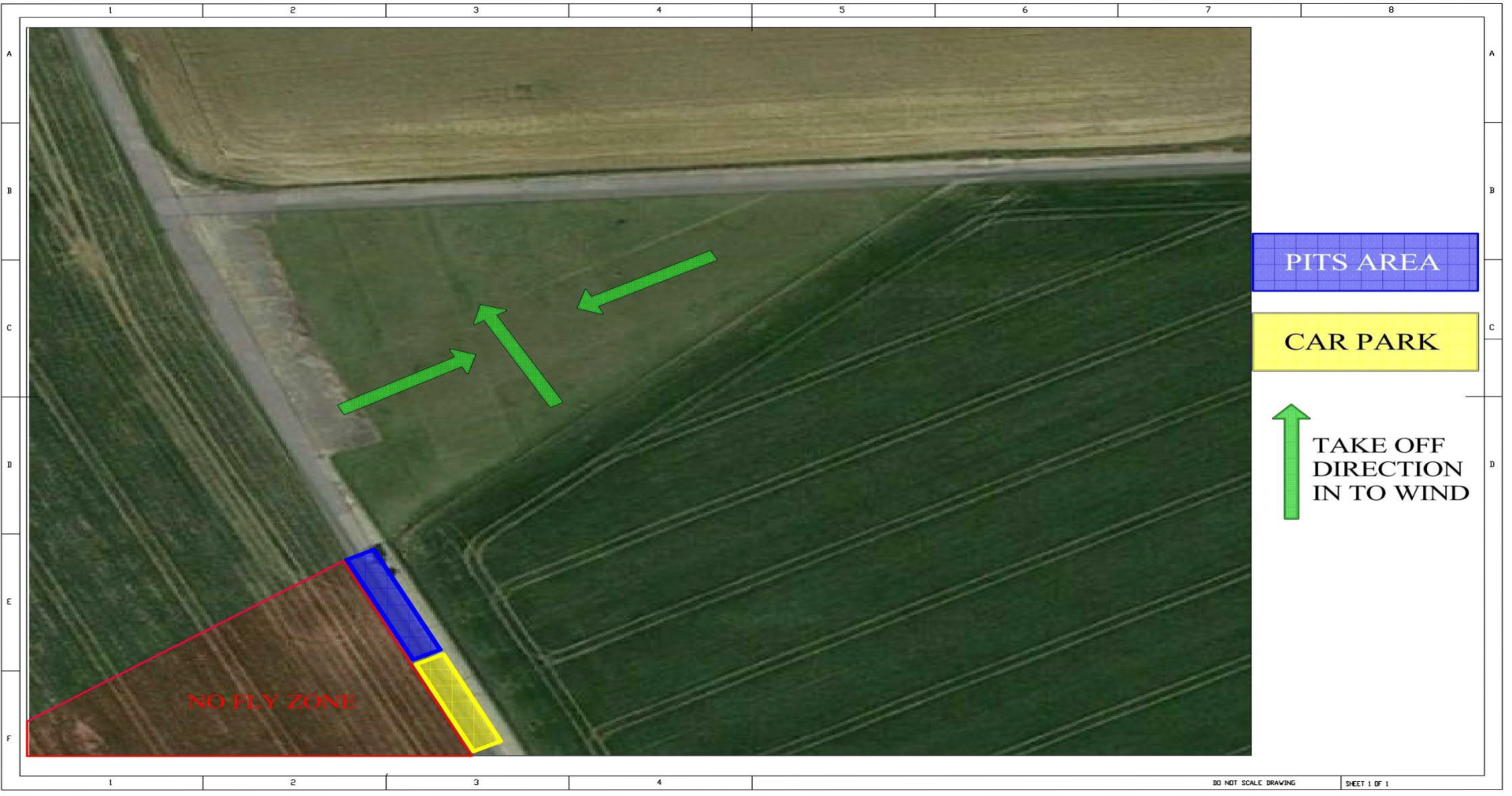
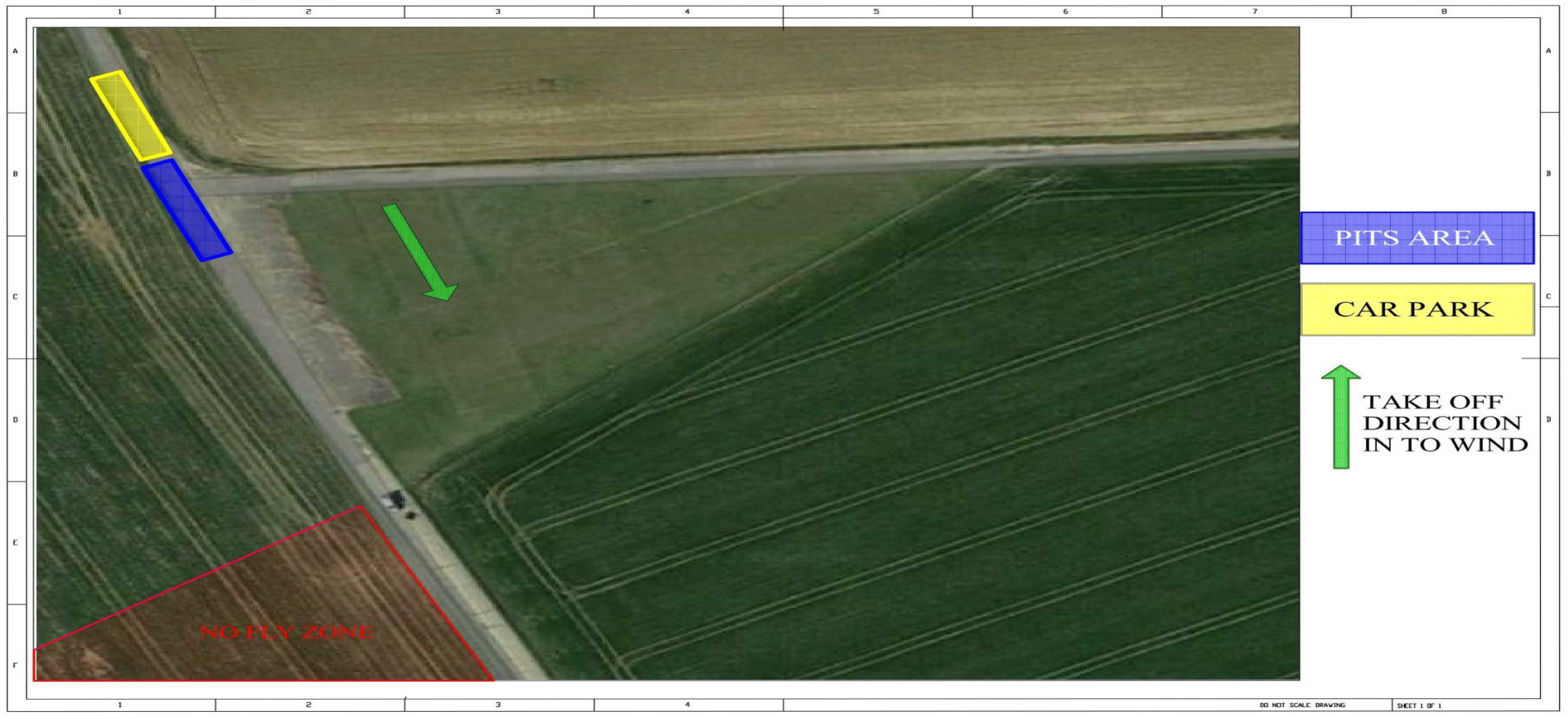
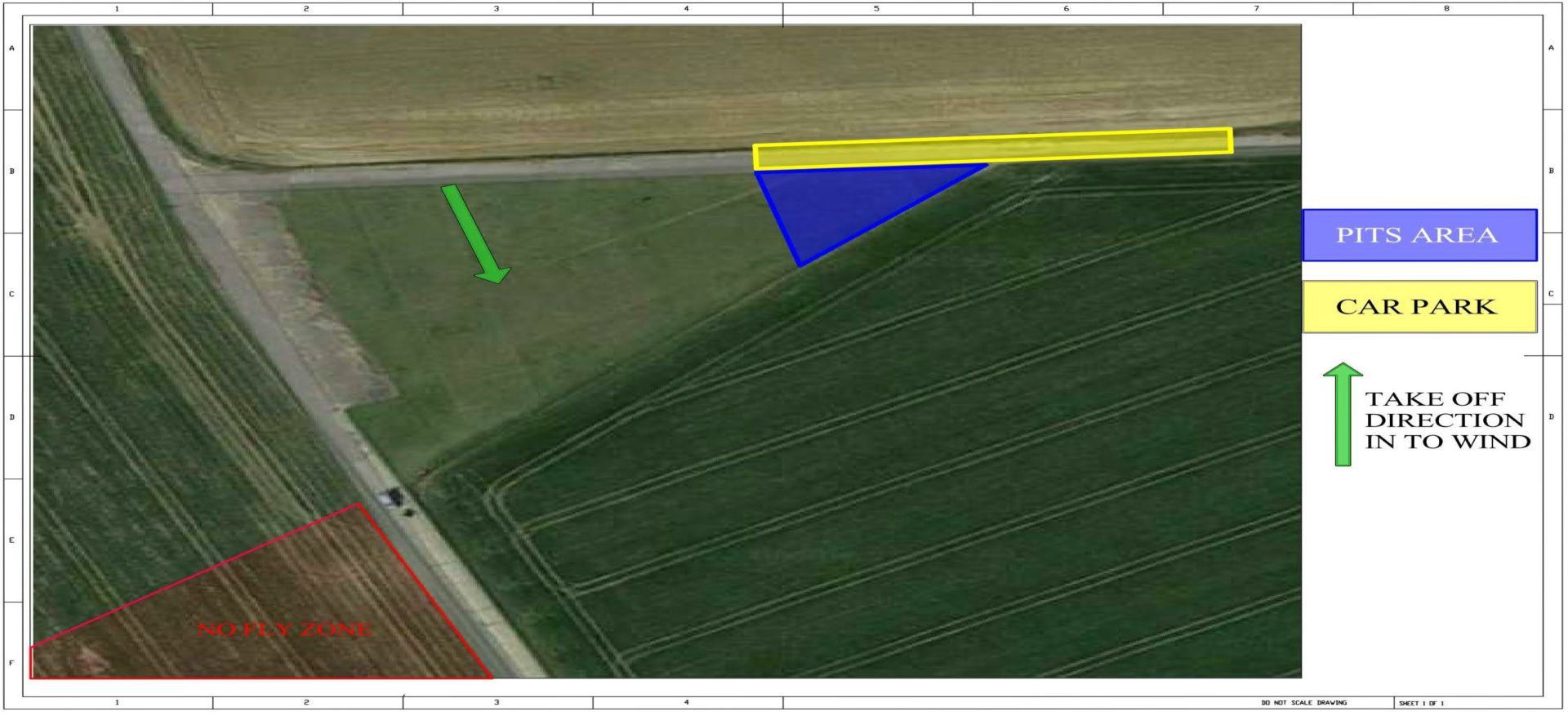
Before each flying session, a committee (or longest serving) club member present shall allocate a pit position/flying area for fixed—wing and helicopters relevant to weather conditions/safety factors. This may change during the day. The pictures attached following these rules should help. For people using 35MHZ, the peg board must always be used. A peg with your name and frequency number must be attached to the appropriate tag before switching on. Take—off and initial turn after lift-off shall be made away from the pits. At all times While flying, pilots will stand alongside each other. Any malfunction to a model flying (actual or apparent) shall signal an immediate end to that flight. Helicopters must only be hovered and landed in an area Where they will not interfere with fixed—Wing take—off and landing. Before a model is ready for take—off, the pilot or assistant shall notify other pilots and check for airborne models on low pass— es, landing approach or dead stick (engine failure). Pilots shall call ‘landing’ or ‘dead stick’ to notify other pilots before landing. Pilots shall notify anyone who is flying before retrieving a model from the runway and should call ‘all clear’ when model has been retrieved. Do not assume everyone has heard you; get an acknowledgment from flyers before walking onto runway, keep your eyes open and listen for other calls of dead stick/landing. If you get in trouble, call for assistance. Starting a stalled engine or general wandering about on the runway is not allowed. Inexperienced flyers should not fly without an experienced pilot assisting. If for whatever reason you think you can’t make the landing area, Don’t Try It! Land out in the rough away from people.